

Main Content
Motor circuit function
The central question of our research concerns the elucidation of mechanisms involved in function, assembly and plasticity of neuronal circuits controlling motor behavior.

An important function of the nervous system is the production of diverse motor actions. Motor behavior is guided by a combination of intentions and integration of many occurring stimuli. Complex neuronal circuits transmit instructions for motor program execution from the brain via the spinal cord to muscles, ultimately leading to animal behavior.
Organization and function of neuronal circuits
Precise neuronal wiring through synaptic connections plays an important role for the function of neuronal circuits. Our research aims at elucidating how neuronal circuits involved in motor behavior are organized, function in execution, assemble during development and change plastically during learning.
Circuit connectivity in the motor system
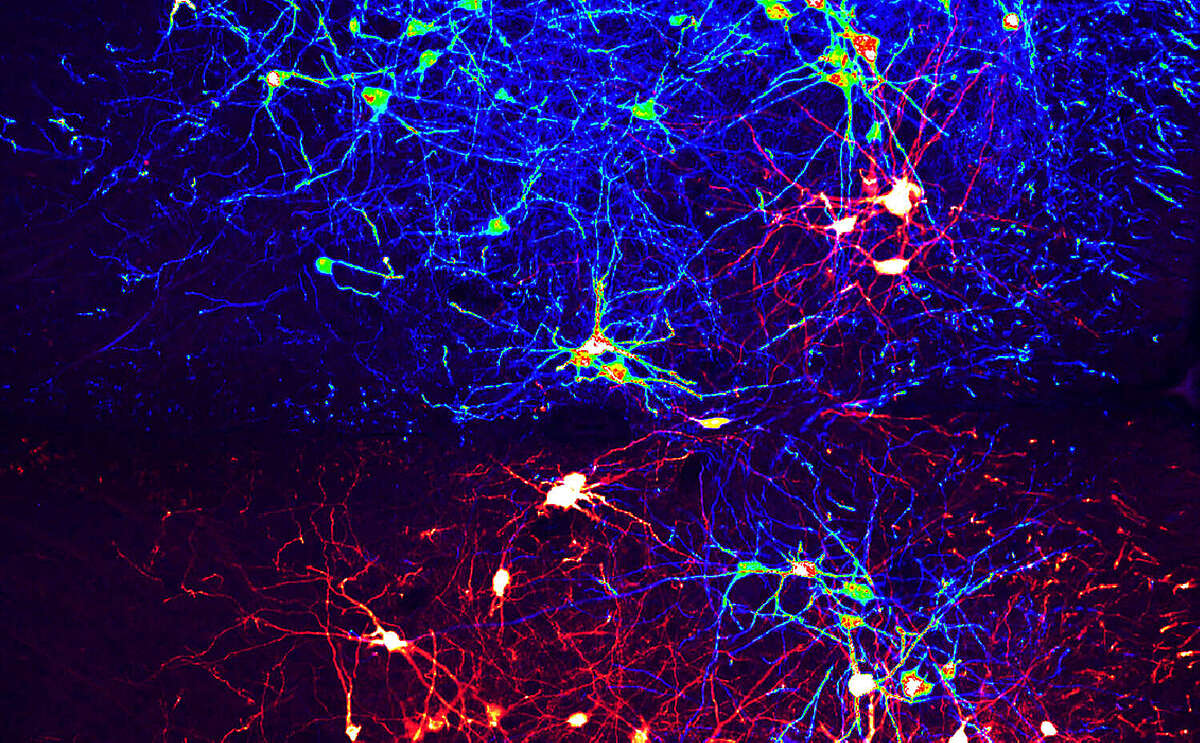
To understand how motor circuits function, we use multi-facetted approaches combining many technologies. These include state-of-the-art mouse genetics, development and implementation of viral technologies for transsynaptic circuit tracing and functional manipulation by opto- and pharmacogenetics, quantitative behavioral analysis, electrophysiology and gene expression profiling of identified neuronal subpopulations.
Precision and malfunctioning of motor circuits
Our research reveals the existence of precise synaptic interactions within dedicated motor circuit modules throughout the nervous system and how these impact on function. Diseases of the nervous system frequently lead to motor behavioral deficits and spinal cord injury causes immobility. Understanding principles of motor circuit function will be essential for future interventions.