


Main Content
Skeletal muscle cell plasticity in health and disease
We investigate the molecular mechanisms underlying muscle function and plasticity for a better understanding of the fundamental physiological and pathophysiological processes.

The skeletal muscle is a highly plastic organ, able to adapt to contraction, nutrient availability and supply, ambient oxygen and temperature, as well as numerous other perturbations. In recent years, novel functions of muscle beyond force generation have been discovered, with enormous physiological and clinical implications.
Therapies for muscle diseases are elusive
Inadequate muscle function and a sedentary lifestyle are strongly linked to many diseases, including metabolic disorders, cardiovascular pathologies, certain types of cancer, neurodegeneration, muscle wasting in aging (sarcopenia), and muscular dystrophies. However, the molecular mechanisms that control these processes are still poorly understood and therapies accordingly rare.
From molecule to organism in health and disease
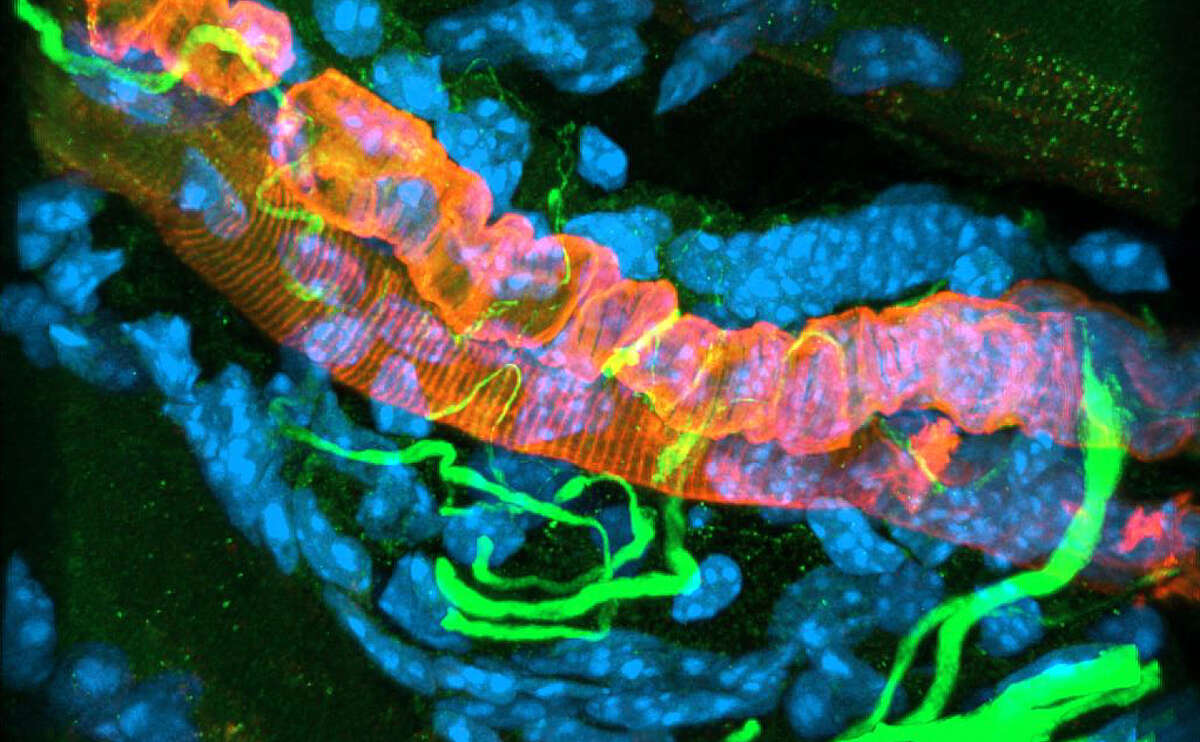
We are interested in understanding and linking molecular mechanisms to physiological processes and pathophysiological events in skeletal muscle. In addition, the interaction of muscle with other cell types and tissues, e.g. the neuromuscular junction (NMJ) and motor neurons, is interrogated to reveal insights about the broader aspects of muscle plasticity. Therefore, we study exercise – the main physiological function of muscle – juxtaposed to inactivity, aging, cancer cachexia, muscular dystrophies and other muscle wasting pathologies.
Role of muscle biology and plasticity
The physiological and pathological paradigms reveal insights into the mechanistic underpinnings of muscle biology and plasticity, the multicellular interactions within the tissue, and the broad systemic organ cross-talk. These processes are crucial for our health, and inversely linked to the increased risk for and etiology of numerous diseases. We thus aim to unravel the complexities and underpinnings of muscle cell biology embedded in the multicellular tissue environment, and the bidirectional systemic crosstalk with other organs.