


Main Content
Integrative structural biology with NMR spectroscopy
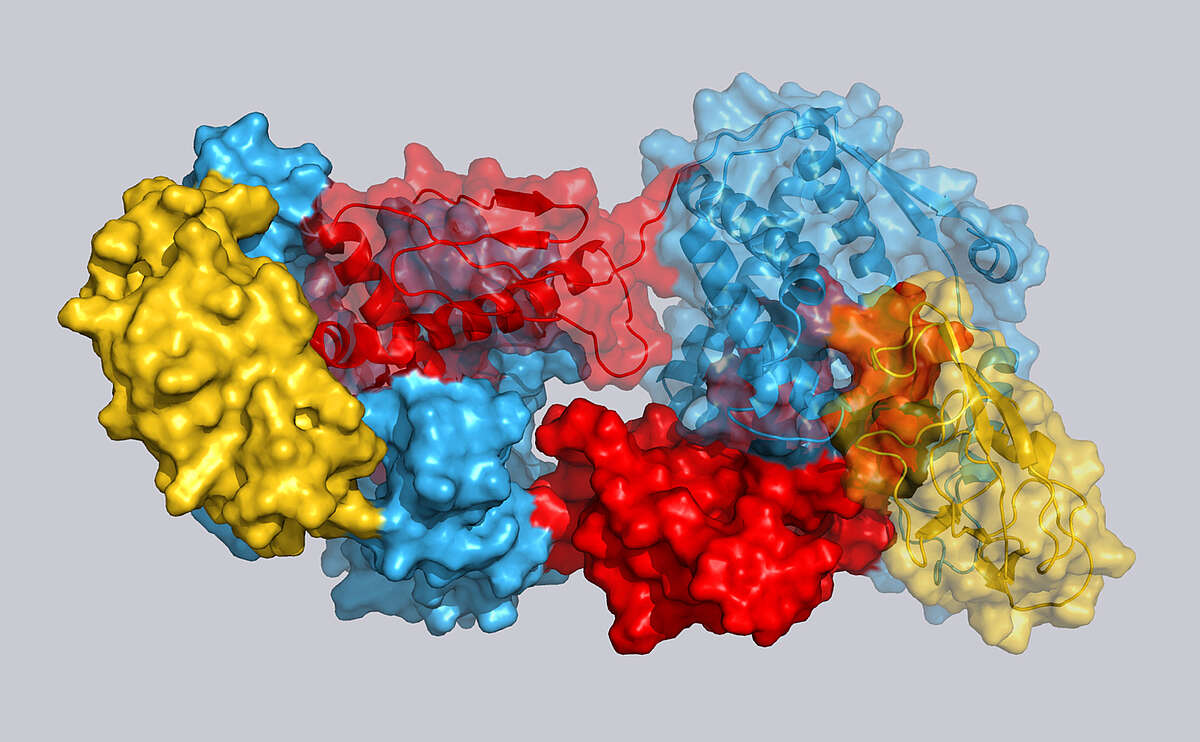
We apply nuclear magnetic resonance (NMR) spectroscopy combined with other biophysical methods to resolve structure, dynamics and function of proteins and their complexes at atomic resolution.

Proteins perform essential biological functions, including signal transduction, catalysis, cellular homeostasis, metabolism and membrane transport. We characterize the underlying mechanistic processes at atomic resolution by solution NMR spectroscopy and related techniques.
Principles of chaperone function
Molecular chaperones are helper proteins that ensure the proper formation of other proteins – their clients – in the cell. We describe structure and dynamics of chaperone–client complexes at atomic resolution to reveal the biophysical laws governing chaperone function. Our recent discovery of large chaperone condensates has reshaped how we think about the endoplasmic reticulum.
Outer membrane protein biogenesis and novel antibiotics
Proteins in the outer membrane of bacteria are produced by an assembly line of molecular chaperones. We investigate the underlying interactions, mechanisms and folding reactions at atomic detail. Of particular interest is the huge insertase BAM that folds and inserts the outer membrane proteins into the membrane. BAM is a highly valuable target for novel antibiotics.
Dynamic kinases and kinase interactions
Kinases govern central cellular functions. We investigate how bacterial kinases are controlled by second messengers and how the mammalian TOR complex interacts with its dynamic substrate proteins to control cell growth and division. These interaction studies between flexible substrates and gigantic kinase molecules benefit optimally from the power of solution NMR spectroscopy.
Advanced NMR Methods
Since its introduction into biology, biomolecular NMR spectroscopy experiences continuous improvement. We advance NMR techniques to improve sensitivity and employ automated protein production to generate data sets on protein dynamics on the scale of hundreds of proteins and beyond.