



Main Content
Nanobiology: Life signs at the nanoscale
Our group seeks to resolve the fundamental principles and functional relationships between molecular mechanics, selectivity and transport in biological systems.
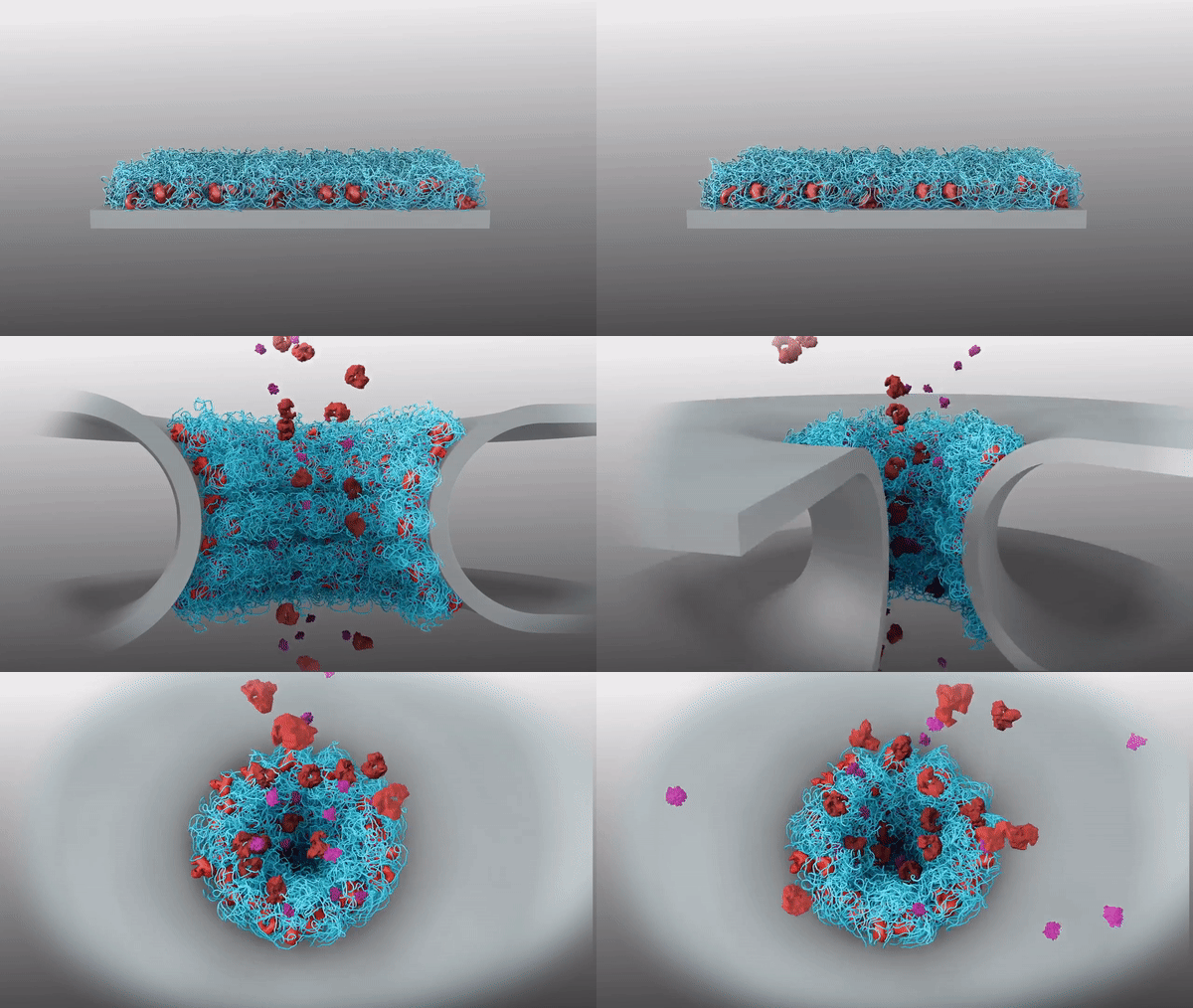
Nature has developed sophisticated biological machines that are fundamentally intriguing and technologically unprecedented. Here, we use quantitative nanoscience techniques and develop new biophysical methods to obtain deep insight into the interactions that drive biological functionality. In return, we realize and implement biomimetic concepts for novel non-physiological applications.
Selective transport through the nuclear pore complex
We want to know how the nuclear pore complex (NPC) facilitates the rapid and selective exchange of specific cargo proteins into and out of the cell nucleus. Each 50 nm-diameter NPC functions as a gate that is open or closed depending on whether it recognizes the "identity" of its molecular "guest". Our objective is to decipher the biophysical mechanisms that govern NPC transport selectivity. To underscore this point, viruses hijack the very same mechanisms to infiltrate the nucleus.
Mechanobiology and the diagnostics of disease
We use atomic force microscope (AFM)-based technologies developed in our lab to study the mechanobiology of cells within tissues with sub-nanoNewton precision. We anticipate that such information can be relevant to understanding diseases such as breast cancer and cartilage degeneration i.e. osteoarthritis.
Building biomimetic devices inspired by nature
"Protein targeting" refers to how proteins are delivered to the precise spatial location within the biologically complex environment of the cell. Based on our understanding of molecular transport and selectivity, we aim to replicate the same biochemical selectivity and protein targeting control in biomimetic molecular transport systems with potential applications in water purification and bioseparations.

